
The Difference Between Lean and Shredded
The shift in discipline, detail, and mindset it takes to get there
Getting lean is pretty straightforward.
If you are paying attention to your diet, training consistently, and maybe adding a little extra cardio, you are already doing most of what is required. There is nothing overly complicated about it.
For most guys, being lean falls somewhere in the eleven to thirteen percent body fat range. At that level, you have visible abs, you look fit, and you stand out compared to the average person. But you still do not have that next level look. You are in great shape, but you do not have that sharp, defined, almost carved appearance.
That next level is what most people refer to as being shredded.
This is when you are at ten percent body fat or lower. This is where everything changes visually. Muscle separation becomes very noticeable, definition increases everywhere, and you start seeing details in your physique that were not visible before. It is a completely different look.
Getting there, however, is where things become more challenging.
It is not that the principles change. It is that the level of execution needs to be much tighter. What used to be good enough is no longer good enough. Small details start to matter, and your margin for error becomes smaller.
It is also important to understand that this is not a place most people should try to stay in long term. For most, it is something you push for a short period of time. A month or two at most. This is why people typically aim for it around summer, vacations, or specific events.
Do you need to get shredded? No.
For most people, getting lean is more than enough. You will look better than the majority of people and you will feel good doing it.
But if you are someone who likes to push your limits, test yourself, and see what you are really capable of, then going from lean to shredded can be a worthwhile challenge.
The main difference
The foundation does not change. You still need to be in a caloric deficit. You need to burn more calories than you consume.
That part stays the same.
What changes is how precise you need to be.
As you get leaner, your body becomes more sensitive. Food choices matter more. Timing can matter more. Recovery becomes more important. Sleep becomes more important. Everything starts to stack.
When you are just trying to get lean, you can get away with being a little loose. When you are trying to get shredded, that is no longer the case.
Getting lean is manageable.
Getting shredded takes discipline, planning, and the ability to stay consistent even when you do not feel great.
Starting point
For this to make sense, we are assuming you are already lean. Somewhere around 11 to 13 percent body fat.
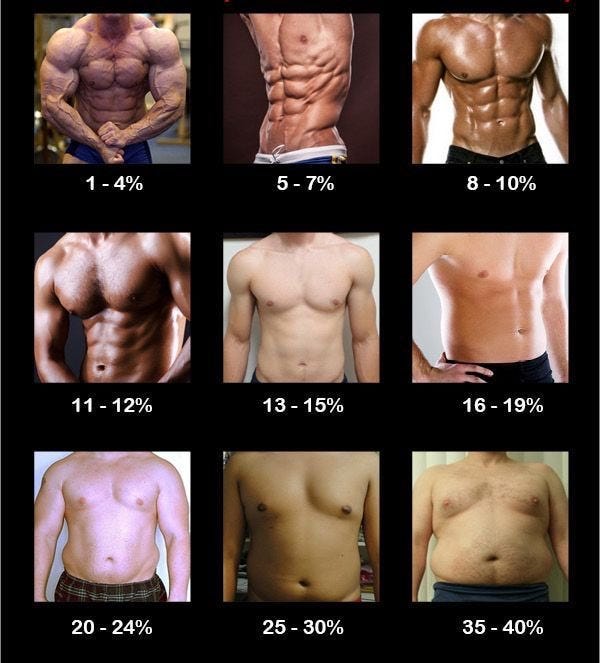
From there, most people can get down to a shredded level within four to eight weeks. The leaner you start, the faster it will happen.
The goal is not to crash diet your way there. You want to move efficiently, but not so aggressively that you lose muscle or completely drain your energy.
There are three main things you need to stay on top of during this phase.
-Hunger
-Energy
-Performance in the gym and maintaining muscle
At this stage, building muscle is not the goal. Your goal is to hold onto what you have already built.
The leaner you get, the more your body wants to let go of muscle. That means your training still needs to be intentional. You need to give your body a reason to keep that muscle.
Energy is another big factor. You are in a calorie deficit and your body fat, which is stored energy, is getting lower. That means you are naturally going to feel more depleted.
You have to manage that in a way that does not negatively affect your work, your responsibilities, or your overall quality of life.
Then there is hunger.
When you are just lean, hunger is something you notice occasionally. When you are pushing toward being shredded, hunger can become constant if you are not managing it properly. This is where most people struggle.
Gut check
Before going all in, it is worth taking a step back and asking yourself if this is something you really want to do.
For some people, this process is manageable.
For others, it can be very difficult. Energy can drop, libido can drop, and overall you may not feel great.
You need to be honest with yourself about that.
Another important point is that this only looks the way you expect if you have a solid amount of muscle.
If you do not have that foundation, getting very lean is not going to give you the result you are imagining.
For most people, a body fat range of 7 to 9 percent is where that shredded look really comes together. Some people can maintain that without major issues, but for most it is not something they will hold long term.
That said, when you reach that level, the visual payoff is significant.
People notice. Your face looks sharper. Your physique looks more defined. You look smaller in clothes, but much more muscular when you are not covered up because of the definition.
If you take fitness seriously, this is something worth experiencing at least once. It gives you a different level of appreciation for what you have built.
Just understand that it is temporary.
How to approach it
At this point, routine becomes extremely important.
The more structure you have in your day, the easier everything becomes. Consistency with meals, training, and sleep will make a big difference.
You are going to feel tempted to break from your plan. That is part of the process. Having structure makes it easier to stay on track.
Diet
The core principle stays the same. You want to be in a moderate calorie deficit, somewhere in the range of three hundred to 500 calories per day on average.
From there, you can use strategies to make things more manageable.
One approach is adjusting your carbohydrate intake based on your activity level. Higher carbs on training days to support performance, and lower carbs on rest days when your body does not need as much.
Food selection becomes more important as well.
You want foods that allow you to eat a decent volume without taking in too many calories. Lean protein sources become very valuable here because they are filling and lower in calories.
At this stage, most people find themselves eating similar meals day to day. It is not exciting, but it works because it removes guesswork and helps with consistency.
Training
Your workouts are not always going to feel great. That is expected.
The goal is not to chase new personal records. The goal is to maintain strength and keep training intensity high enough to preserve muscle.
You also need to be smart with your exercise selection.
When you are in a depleted state, your risk of injury is higher. This is not the time to experiment or push unnecessary limits.
Energy
Energy is going to be lower. That is part of being in a deficit and having less stored body fat.
You can manage it by prioritizing sleep, using caffeine strategically, and paying attention to recovery.
Things like carb timing, rest days, and overall lifestyle habits start to play a bigger role in how you feel day to day.
Appetite
This is usually the hardest part.
Managing hunger becomes critical.
Drinking enough water helps. Choosing foods that are filling helps. Eating slower and being more mindful with meals helps.
Caffeine can also be useful as an appetite suppressant, but it should be used strategically, not relied on excessively.
Final thoughts
Going from lean to shredded is not about doing something completely different. It is about doing the same things at a higher level.
-More consistency
-More attention to detail
-Better control over your habits
You need to manage hunger, energy, and performance all at the same time.
It is not easy, but it is a challenge that can teach you a lot about yourself.
At the end of the day, it is a choice.
If you decide it is worth it, commit to it and see it through.