The Ultimate Guide to Back Training: Width vs Thickness Explained
Master back development by understanding what muscles you’re actually training—and how to train them right.
Let’s break down back training the right way
Our 3rd installment of our body part specific training guidance might be our most in-depth. Out of all the muscle groups you train, the back is hands down the most complex. Chest? Two muscles. Arms? Two main ones. Legs are big, sure—but back is dense with detail. Over 40 muscles back there, 20 of them in pairs. You’ve got layers, different muscle fiber directions, and different functions depending on what part of the back you’re working. Most people have no idea how to train it right, so their backs stay flat and underdeveloped.
Let’s fix that.
We’re going to break it down into two big sections: back width and back thickness. You need both if you want that full, powerful look. If you just train one, your physique’s going to look incomplete—either flat from the back or narrow from the front.
What is back width?
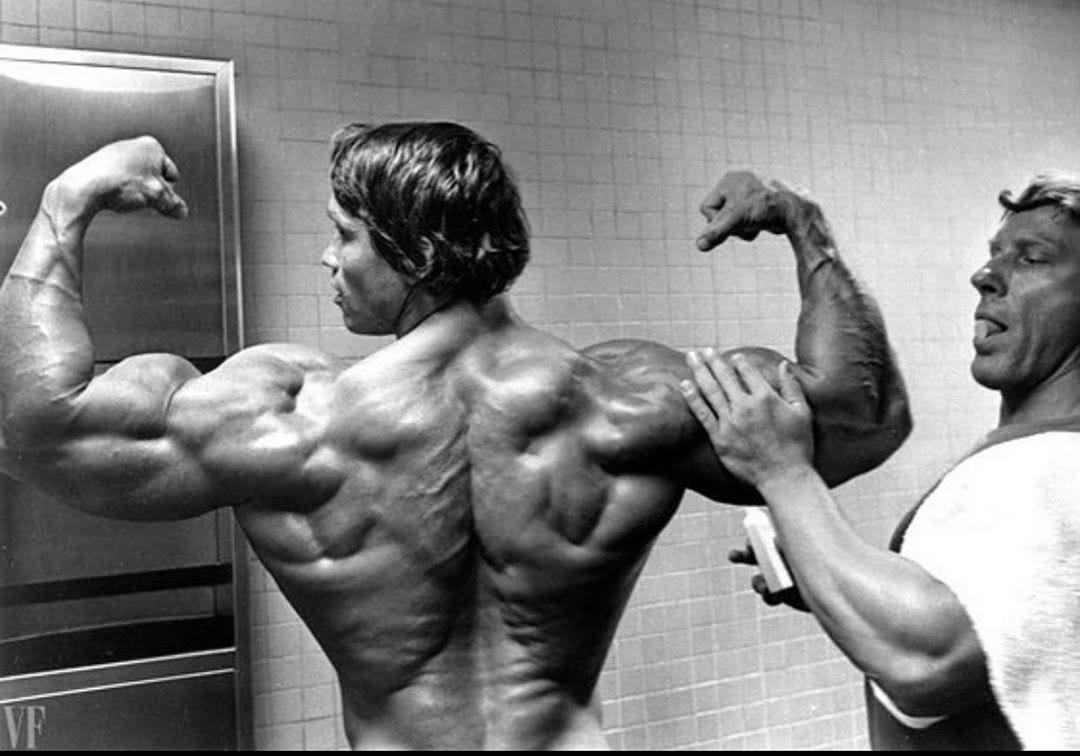
Back width is that broad V-shape when someone’s standing in a shirt and their lats flare out past their arms. It makes your waist look smaller, your frame look bigger, and adds that athletic, wide-set silhouette that bodybuilders and athletes chase.
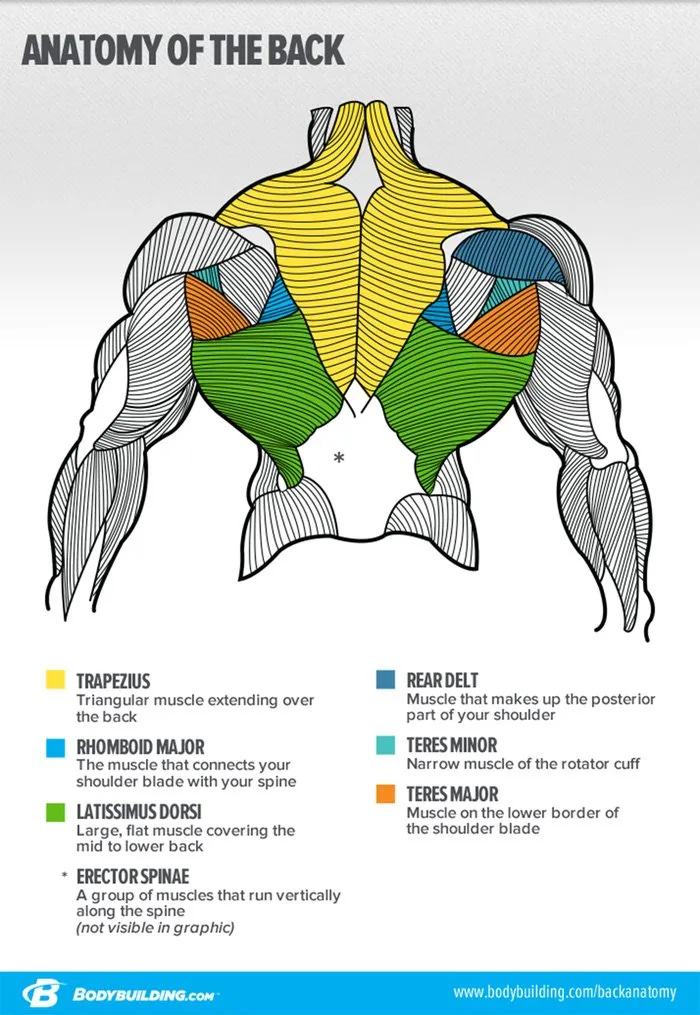
The main muscle responsible for back width is the latissimus dorsi, or lats. These are the big, wing-like muscles that run from your mid-to-lower spine and sweep up and out toward your armpits. They attach to your upper arm bone (the humerus), which is important for how you train them.
Why that matters:
Most people pull from the wrong angles. To fully engage the lats, you need to move your arms in the direction the muscle fibers run. That means pulling from out in front of you and down, not just yanking straight down with wide arms.
How to train for width
You’ve got to use exercises that emphasize vertical pulling. Think lat pulldowns, chin-ups, machines that mimic a pullover, and any variation of a pulldown where you keep your elbows tight and pull them into your sides.
Key cues for training lats properly:
Arms should start out in front of you. Not flared out to the sides.
Pull with elbows, not hands. Think about pulling your elbows into your back pockets.
Keep elbows close to your body. No flaring out. Flaring turns the movement into an upper back lift.
Grip should be shoulder width or closer. Too wide, and you shift away from lats into upper back.
Control the eccentric (lowering phase). Don’t just let the weight drop. The stretch is where a lot of the growth happens.
Brace your core and keep your spine neutral. Don’t arch like crazy. That engages the upper back and takes the lats out.
Best width-focused exercises (ranked)
Single-arm plate-loaded pulldown – Pure lat focus. Keeps tension high and lets you work through a full range of motion.
Pullover machine or cable rope pullovers – Best lat isolation tool. Keeps your arms straight and takes other muscles out of it.
Cable lat pulldowns (narrow grip) – Classic. But only if you do them with correct elbow position and cueing.
Rack chins – If you know, you know. Great bodyweight variation with a deeper lat stretch.
Lat-biased rows – These are rows done with narrow grip, elbows tucked, and a focus on the lats. Think elbows going down and back.
Chin-ups – Underrated. Use straps if grip gives out. Go full range. Keep your body tight.
What is back thickness?
Back thickness is all about that depth. This is what makes you look like you’ve got slabs of muscle stacked on top of each other from the side and from the back. It’s what gives you that 3D look. Think of guys whose upper backs pop through their shirts even when standing still. That’s thickness.
The muscles behind thickness:
Traps (especially mid and lower traps)
Rhomboids
Erector spinae (the deep spinal muscles)
Teres major and minor
Rear delts also play a small supporting role
These muscles are best trained with horizontal pulling—so think rowing variations, shrugs, and rack pulls.
How to train for thickness
Thickness is about pulling back, not down. You want to create full scapular retraction. That means your shoulder blades need to come all the way together on every rep.
Key cues:
Drive elbows backward, not down
Squeeze your shoulder blades at the top—like you’re trying to pinch a pencil between them
Slightly arch your back—this helps engage the traps and rhomboids
Control the eccentric—don’t just drop the weight
Use heavy weight, but with perfect form—don’t just yank and swing
Best thickness-focused exercises (in no particular order)
Bent-over barbell rows – The OG thickness builder. Just make sure you’re not cheating with momentum.
Dorian Yates rows (underhand grip) – Great for combining lat and thickness development.
T-bar rows – Pile on the weight and squeeze hard at the top. Use a chest-supported version if your lower back is fried.
Dumbbell rows – Can go heavy here, and you get a great stretch at the bottom.
Rack pulls – Bar set just above knees. This hammers traps and mid-back. Don’t treat it like a regular deadlift.
Lat pulldown with arched back – Lean back slightly, pull bar to mid-chest to shift emphasis toward thickness.
Shrugs – Basic but effective. Heavy weight, full range of motion, don’t roll your shoulders.
Pull-ups – Just like with width, but use a wider grip and focus on squeezing your upper back.
What about deadlifts?
This one’s a little controversial. Here’s my take: deadlifts aren’t great for building muscle in the back. Yes, they train the entire posterior chain. Yes, they make you strong. But if your main goal is back hypertrophy, you’d get more out of a heavy barbell row or a T-bar row.
That said—deadlifts help your strength across the board. So doing them will make your rows and pulls stronger. That’s why I still like to keep them in. But don’t make them the foundation of your back day if muscle growth is the goal.
And if you’re going to deadlift? Don’t program heavy squats the next day. Your spine needs a break. Stick to hack squats or leg press the day after.
Technique matters more than weight
This is the part where most people screw up. They chase weight, not form. They use momentum. They shorten the range of motion. They let their grip fail before their back is even close to fatigue.
Here’s how to fix it:
Use straps – Always. Back is stronger than grip. Don’t let your forearms kill your set.
Slow the eccentric – Lower the weight under control. This is where most of the growth happens.
Use full range of motion – Get a stretch at the bottom, and a full squeeze at the top.
Focus on the muscle you’re training – Don’t just “move weight.” Make every rep count.
Training split tips
I like to split back training into width-focused days and thickness-focused days. That doesn’t mean you only train one part—you still hit the whole back—but you focus harder on one area each day.
A few more quick tips:
Start lat-focused days with a pullover to activate and stretch the lats
Don’t do deadlifts and squats on back-to-back days
If your traps need help, do a couple sets of shrugs, but rack pulls usually take care of it
Use chest support (machine rows, seal rows) if your lower back is tired
Don’t train back with high-volume arms—it’ll fry your recovery
Bottom line
Most people don’t know how to train back properly. They think every row hits lats. They think pull-ups are enough. And they definitely don’t pay attention to their form or exercise setup.
Start training with intention. Know whether you’re training for width or thickness, and set up your exercises to match. Use proper grip, proper elbow paths, and cues that target the right muscles.
Control your reps. Use straps. And split your focus across your training week so every area gets the attention it deserves.
That’s how you build a back that looks like armor—not just from behind, but from every angle.
Yours in Health & Fitness,
-Steve
Co-Founder of Lean Nutrition
DISCLAIMER
This is not Legal, Medical, or Financial advice. Please consult a medical professional before starting any workout program, diet plan, or supplement protocol.